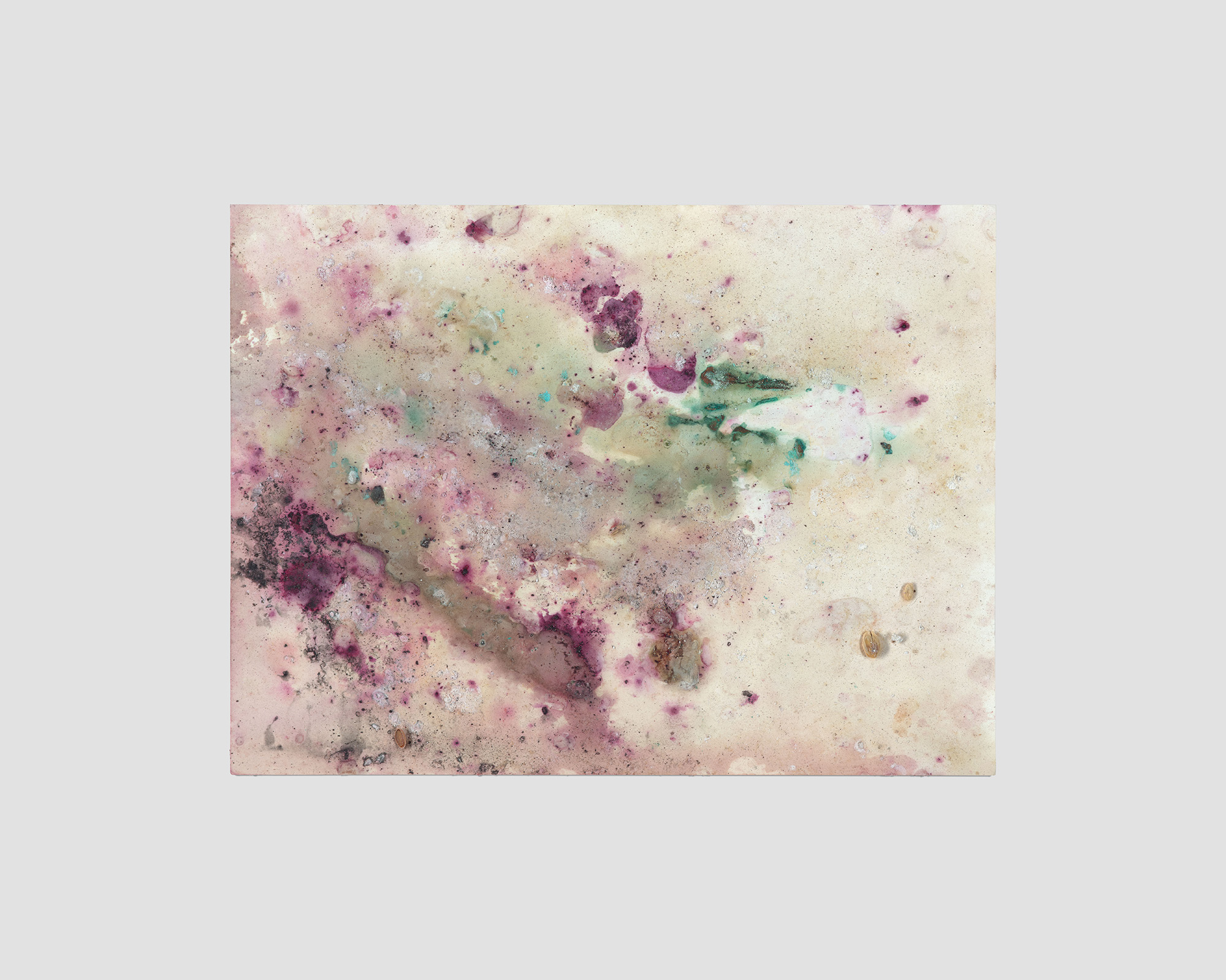
Series of 6 works on paper
copper, banana on paper infused with lemon, cochinilla, and salt from the Dead Sea
9 × 12 inches each
In No identificado, banana bodies are dressed with copper and incubated on paper infused with lemon, cochinilla, and salt from the Dead Sea. The work unfolds through duration rather than force. The bodies are not pressed into the paper; they are held in contact with it, allowing time, acidity, mineral presence, and organic decomposition to produce the image. Through this process of incubation, the paper becomes a receptive ground, absorbing what the banana releases as it transforms.
These bodies are fruit, flesh, offerings, and unidentified presences. Their material identity remains multiple and charged. As fruit, they carry histories of nourishment, cultivation, trade, and extraction. As flesh, they become vulnerable bodies subject to contact, exposure, and decay. As offerings, they enter a ritual register, giving themselves to the surface through seepage, staining, and surrender. As unidentified presences, they evoke bodies that remain unnamed, unclaimed, or unresolved within larger histories of disappearance, displacement, and violence.
The copper dressing functions as a second skin. It protects, conducts, and marks the banana bodies, creating a charged relationship between the organic and the mineral. Copper’s association with transmission and conductivity allows the work to operate as a material circuit, where body, paper, salt, pigment, and acid exchange energy over time. The banana does not simply leave an image behind; it transfers itself into the surface.
The infused paper becomes an active participant in this exchange. Lemon introduces acidity, accelerating transformation and opening the surface to chemical change. Cochinilla brings a red register that moves between blood, dye, wound, and ancestral pigment. Salt from the Dead Sea preserves and burns at once, holding the paradox of care and injury, preservation and erosion. Together, these materials create a field where the mark is not drawn but generated through contact, reaction, and time.
Across the series, bleeding becomes both a visual and conceptual language. The stains are not illustrations of bodies; they are residues produced by bodies. They carry the intimacy of touch and the evidence of transformation. Each sheet becomes a site of witness, holding what the body gives up as it changes form. In this sense, No identificado considers how matter can testify without narration, how a body can remain present through trace, and how residue can become a form of memory.
Each works gather as a quiet procession of material presences. They hold the tension between the sacred and the forensic, the domestic and the historical, the edible and the wounded. Through incubation, the banana bodies bleed into paper and become more than themselves: they become carriers of nourishment, vulnerability, offering, and unresolved presence. In No identificado, the unidentified is not absence. It is a state of endurance, a body continuing to speak through stain, seepage, and transformation.
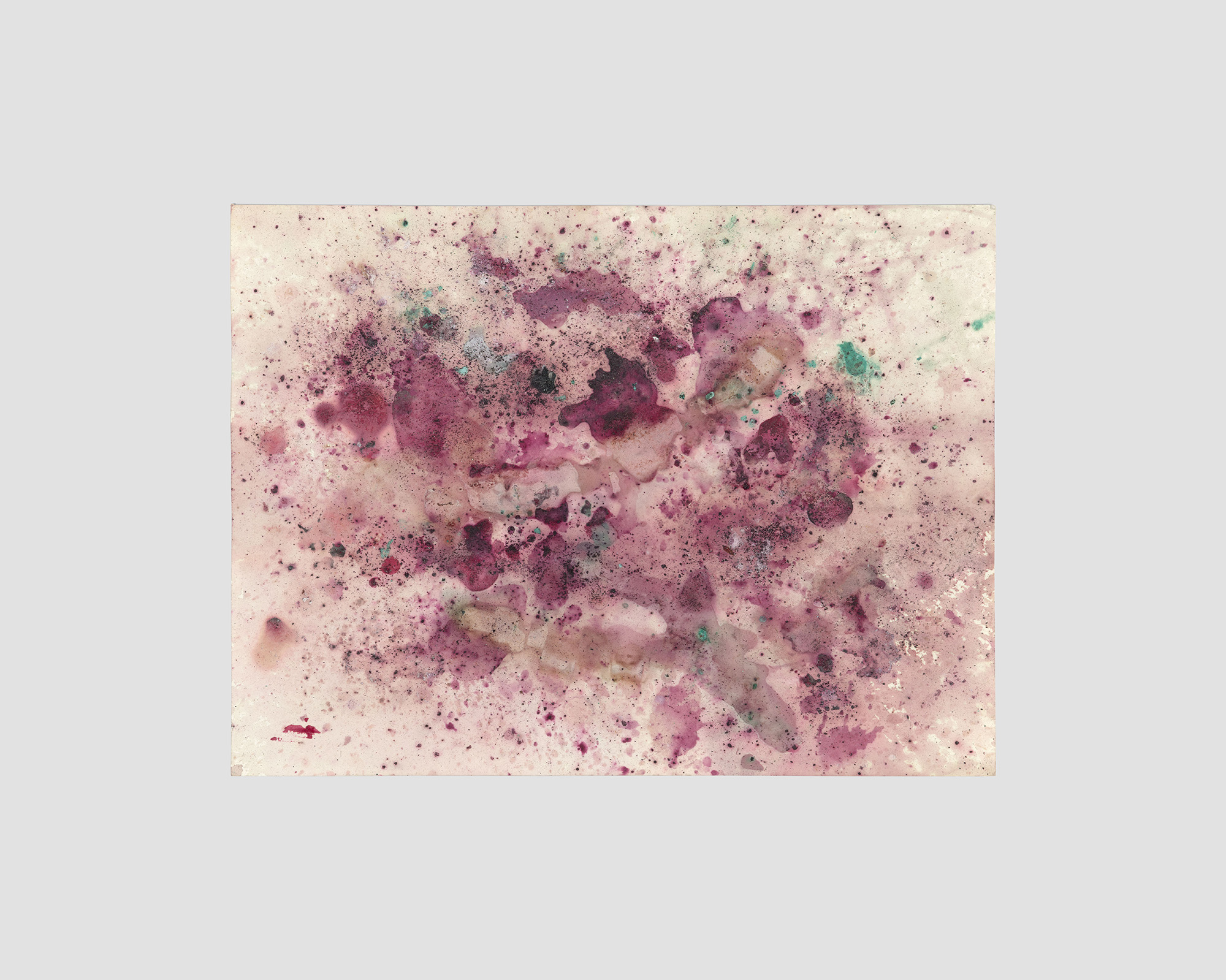
No identificado No. 1
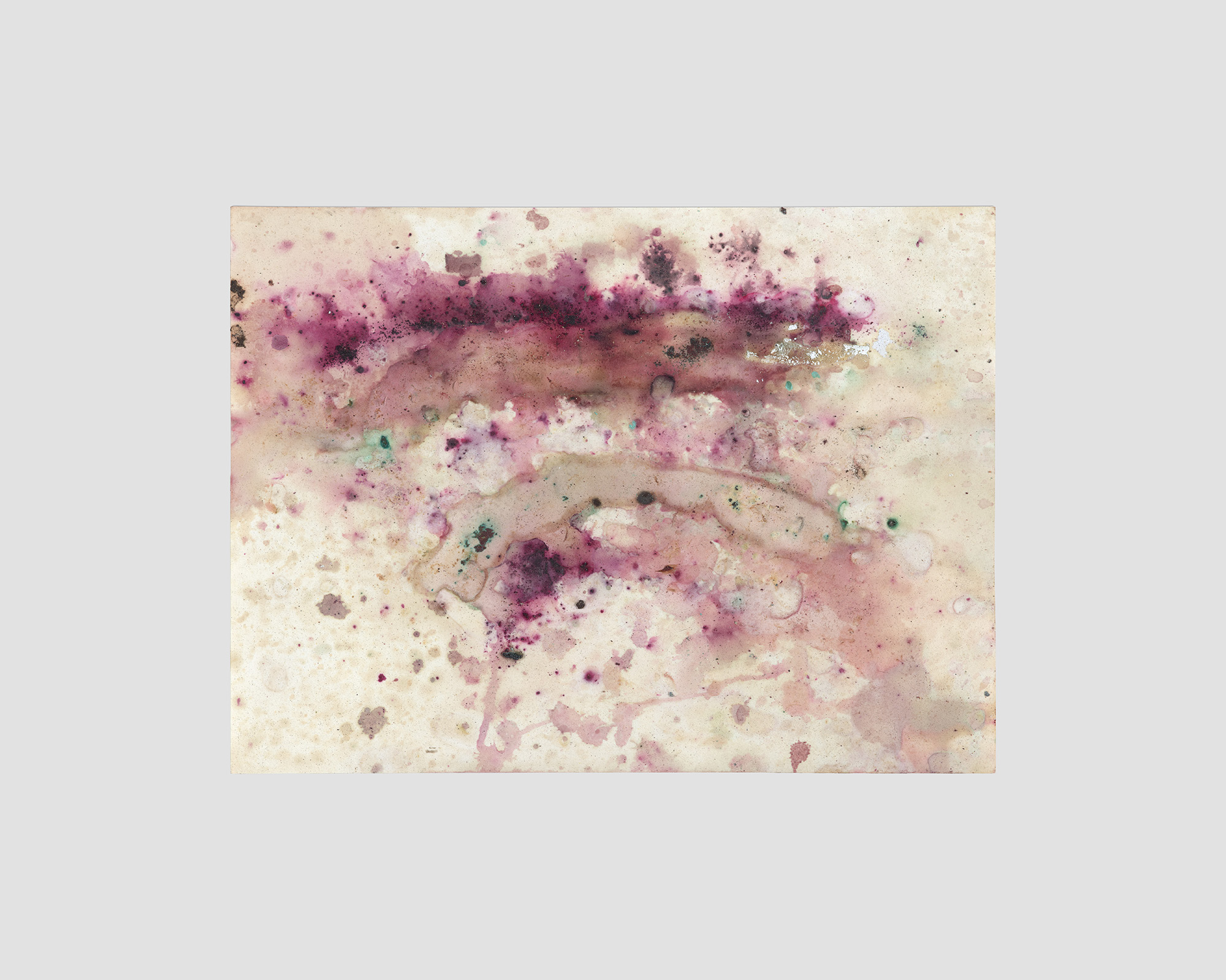
No identificado No. 2
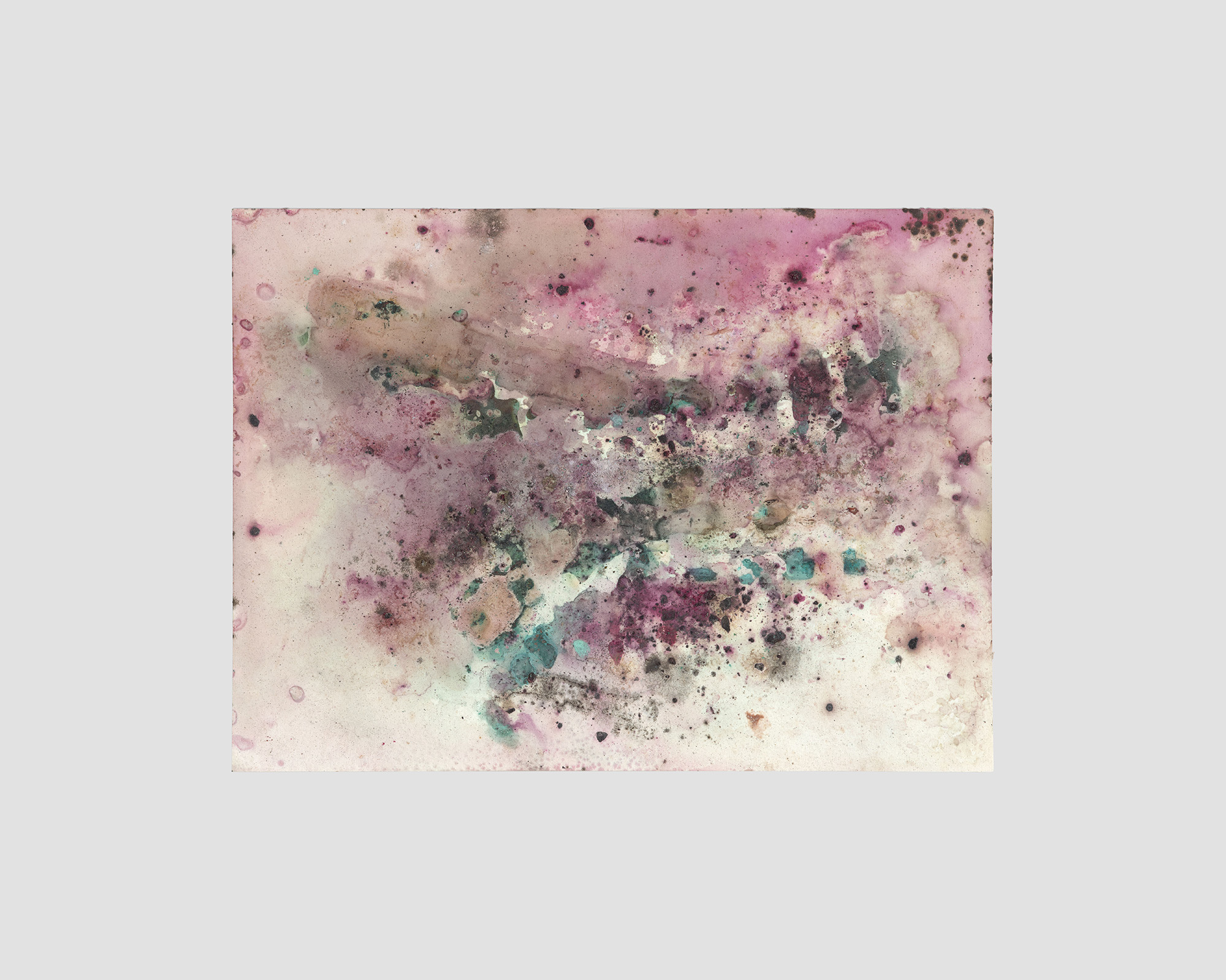
No identificado No. 3
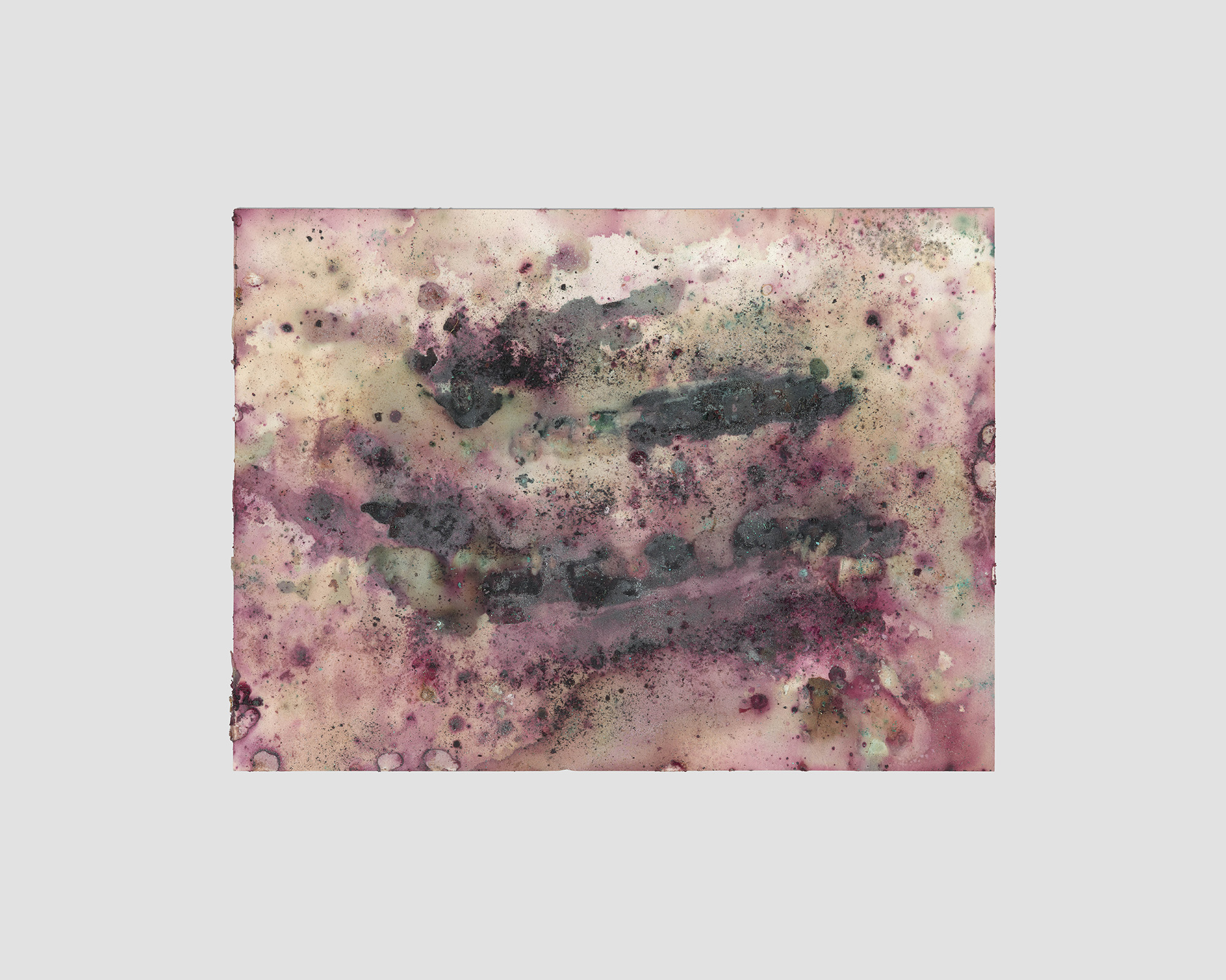
No identificado No. 4
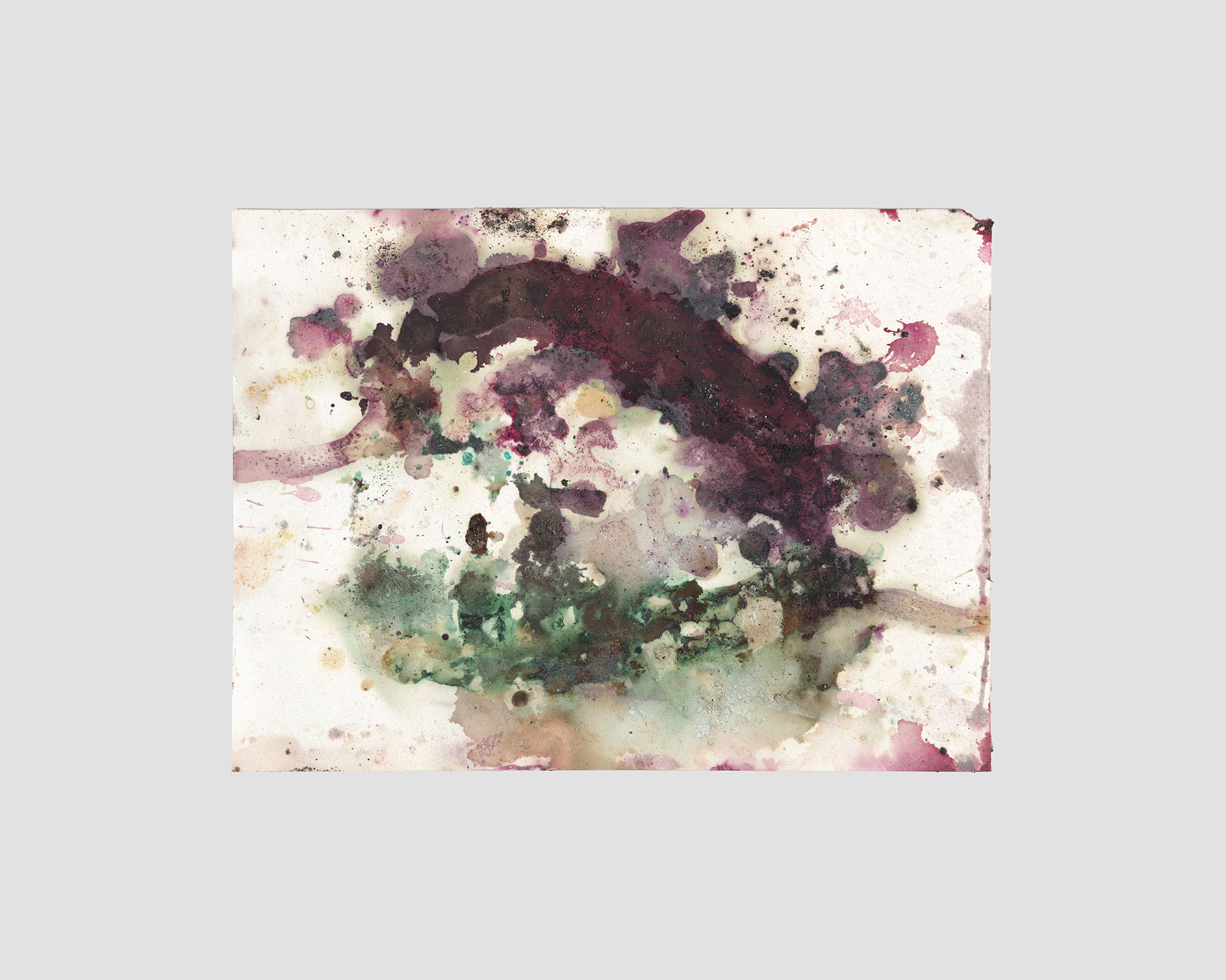
No identificado No. 5